Why pi Never Ends (and How We Compute Trillions of Digits)
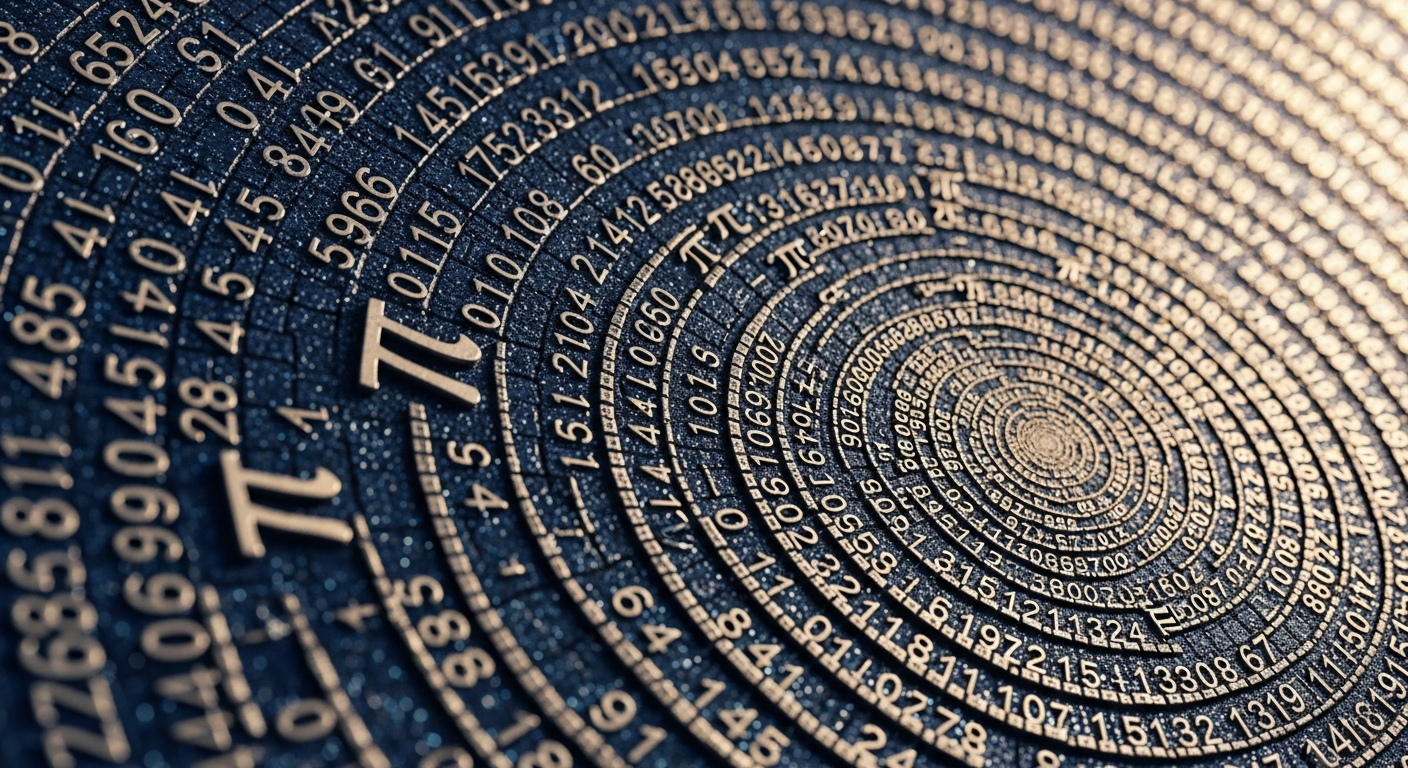 Pi goes on forever, and computers keep pushing further.
Chasing digits of pi
By Peter Teoh, Science Writer
Pi is irrational, so its decimal expansion never repeats. Computing its digits is a stress test for algorithms, hardware, and numerical stability.
Explainer: Algorithms that race for digits
Focus: Classical formulas for pi converge slowly, so modern records use faster series like the Chudnovsky formula. It adds huge blocks of digits per term, making it ideal for high precision work.
To compute trillions of digits, teams combine fast multiplication (FFT methods), careful error checks, and distributed computing. The digits are not just a stunt: the same techniques support cryptography, simulations, and error analysis in scientific computing.
Summary of Key Ideas:
- Pi is irrational, so its digits never repeat.
- Fast series let computers add digits in large chunks.
- High precision math drives real-world algorithms.
Side Notes
- Pi being normal is still unproven: its digits might be random, but we do not know.
- Record runs also validate hardware and storage pipelines.
Trending Sidebar
- Fast Fourier transforms in big integer math.
- Pi digit records as benchmark runs.
Leave a comment