What Happens If You Fall into a Black Hole?
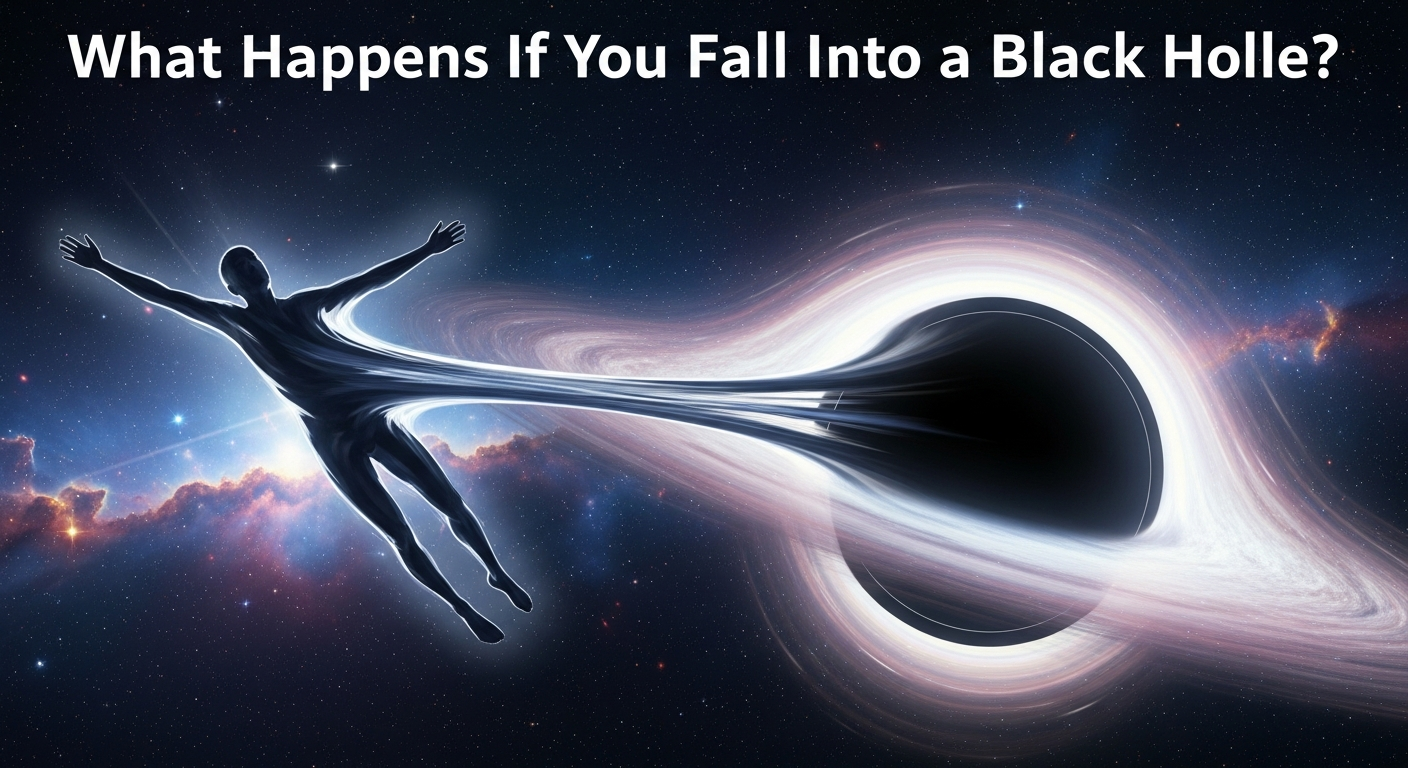 Black holes bend spacetime to extremes.
A one-way trip through warped spacetime
By Peter Teoh, Science Writer
A black hole is a region where gravity is so strong that not even light escapes. The closer you get, the more time and space stretch.
Explainer: From horizon to spaghettification
Focus: Crossing the event horizon is not a dramatic moment for a large black hole, but it is the point of no return. Tidal forces grow with proximity, stretching objects into long strands in a process called spaghettification.
For stellar-mass black holes, the tides are lethal before the horizon. For supermassive ones, you might cross first and be destroyed later, deep inside where physics is still uncertain.
Summary of Key Ideas:
- The event horizon is the boundary of no return.
- Tidal forces stretch and tear matter apart.
- Supermassive black holes are gentler at the horizon.
Side Notes
- Time appears to slow for distant observers.
- Inside the horizon, all paths lead inward.
Trending Sidebar
- Black hole imaging and event horizon telescopes.
- Information paradox debates.
Leave a comment