Why the Sky Is Not Purple
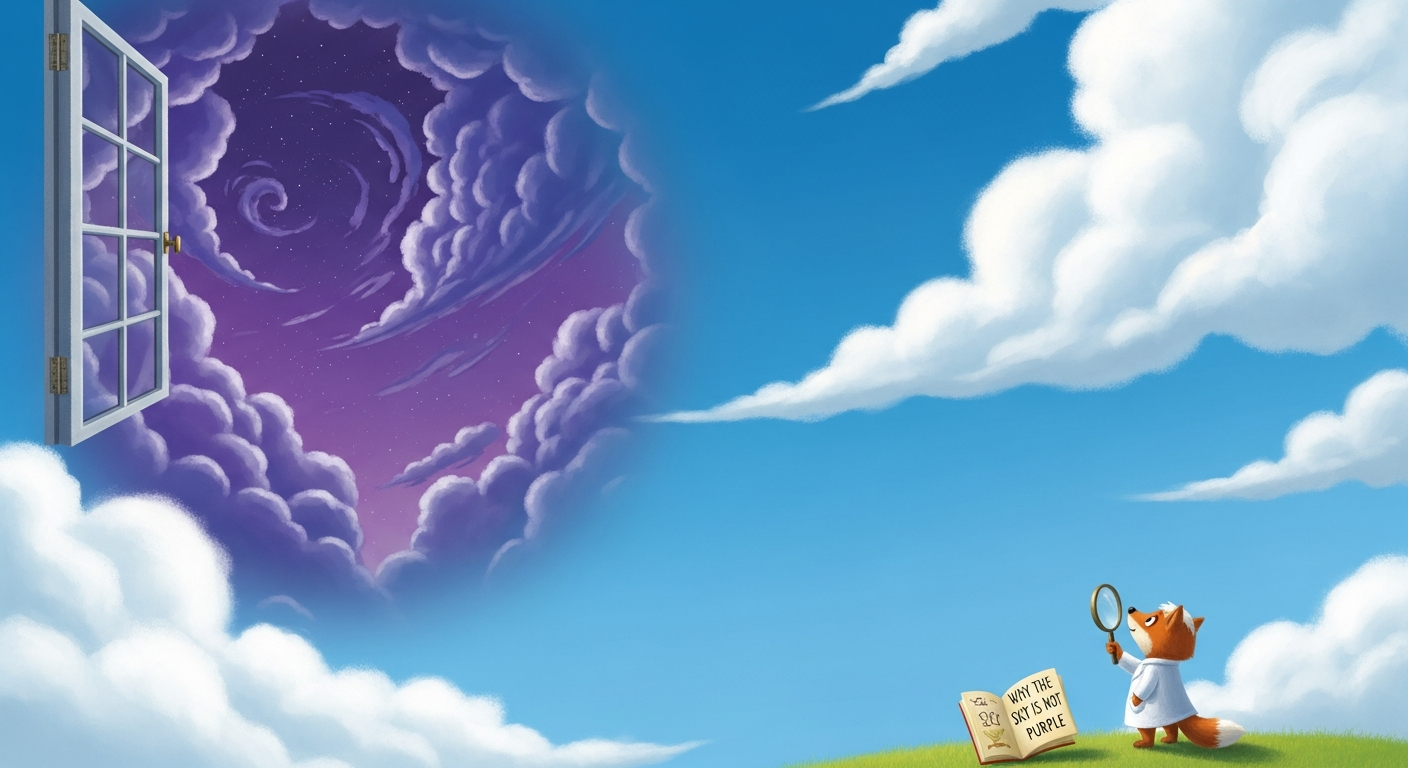 The sky is blue because short wavelengths scatter most.
Blue light wins the scattering game
By Peter Teoh, Science Writer
Sunlight is a mix of colors. The sky looks blue because shorter wavelengths scatter more in the atmosphere, and our eyes are most sensitive to that range.
Explainer: Rayleigh scattering and human vision
Focus: Rayleigh scattering scales with 1/lambda^4, so blue light scatters much more than red. Violet scatters even more, but the sun emits less violet and our eyes are less sensitive to it.
The combination makes the sky appear blue rather than purple. At sunset, sunlight passes through more air, scattering blue away and leaving red and orange hues.
Summary of Key Ideas:
- Short wavelengths scatter more strongly.
- Human vision is less sensitive to violet.
- Long paths through air make sunsets red.
Side Notes
- Aerosols and pollution can shift sky colors.
- The same physics explains blue eyes and blue smoke.
Trending Sidebar
- Atmospheric optics and color science.
- Why sunsets differ across climates.
Leave a comment