The Fibonacci Sequence Hidden in Nature
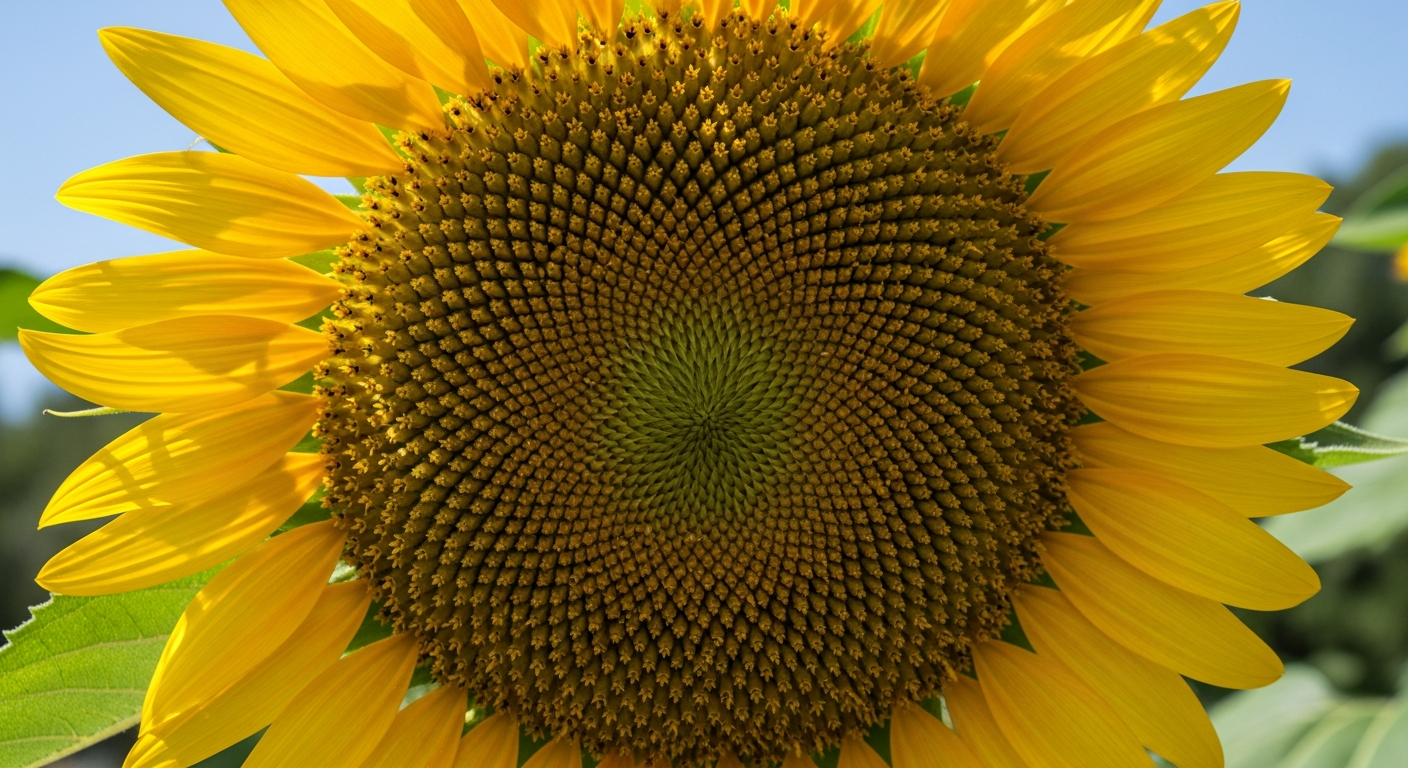 Fibonacci spirals appear in natural growth patterns.
Nature likes efficient packing
By Peter Teoh, Science Writer
The Fibonacci sequence appears in the arrangement of leaves, seeds, and spirals. It is not magic, it is geometry and growth efficiency.
Explainer: Why spirals follow Fibonacci counts
Focus: Plants add new growth at angles that avoid shading older leaves. The golden angle, about 137.5 degrees, spreads leaves evenly and leads to spiral counts that are consecutive Fibonacci numbers.
This is why sunflower seeds, pinecones, and hurricanes can show two spiral families that match the sequence. The pattern is a byproduct of optimization rather than a rigid rule.
Summary of Key Ideas:
- The sequence arises from efficient packing and growth.
- The golden angle distributes leaves evenly.
- Spiral counts often follow Fibonacci pairs.
Side Notes
- Not every plant follows Fibonacci, but many do.
- The golden ratio is tied to the sequence in the long run.
Trending Sidebar
- Phyllotaxis patterns in generative art.
- Fibonacci spirals in storms and galaxies.
Leave a comment