Fractals: Infinite Complexity from Simple Rules
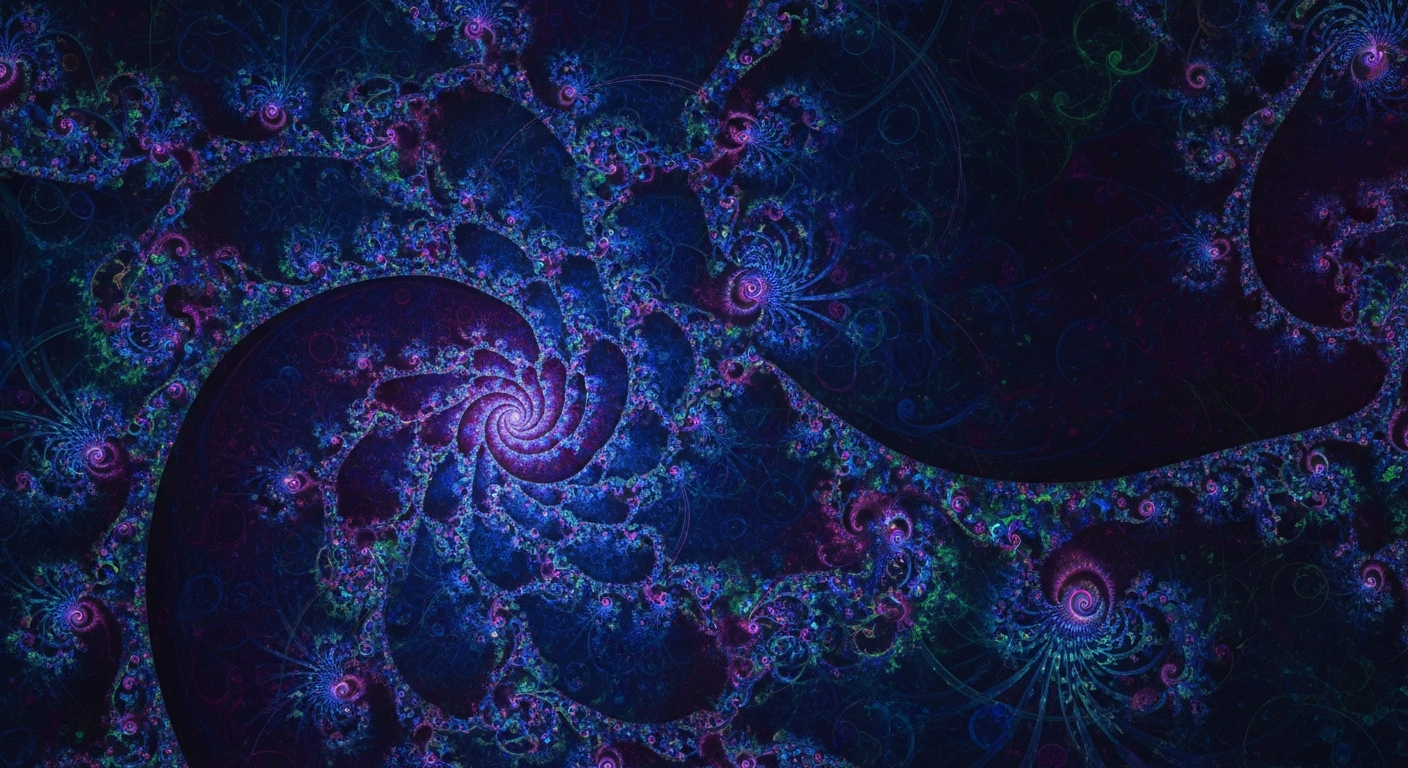 Fractals: infinite complexity from simple rules.
Exploring fractals and self-similarity
By Peter Teoh, Science Writer
Fractals look like art, but they start as tiny rules repeated again and again. Each zoom reveals the same structure at a new scale, turning a simple equation into endless detail.
Explainer: How simple rules explode into detail
Focus: Start with a formula like z = z^2 + c, feed the output back in, and watch the boundary between stable and unstable points emerge. The edge is where the action lives, and it is packed with detail at every scale. This is why a coastline or a fern looks complicated even when the rule is not.
Fractals are measured with fractal dimension, a way to describe shapes that are too jagged to fit into a neat 1D or 2D box. Computer graphics, antennas, and compression all use this idea because nature often grows by repeating patterns.
Summary of Key Ideas:
- Iteration turns simple equations into complex boundaries.
- Self-similarity means the pattern repeats at many scales.
- Fractal dimension describes shapes between dimensions.
Side Notes
- The Mandelbrot set is a map of which values of c stay bounded.
- Julia sets are the related shapes for each fixed c value.
Trending Sidebar
- Procedural worlds in games and film.
- Fractal antennas and signal range.
Leave a comment