Chemical Reactions That Look Like Magic
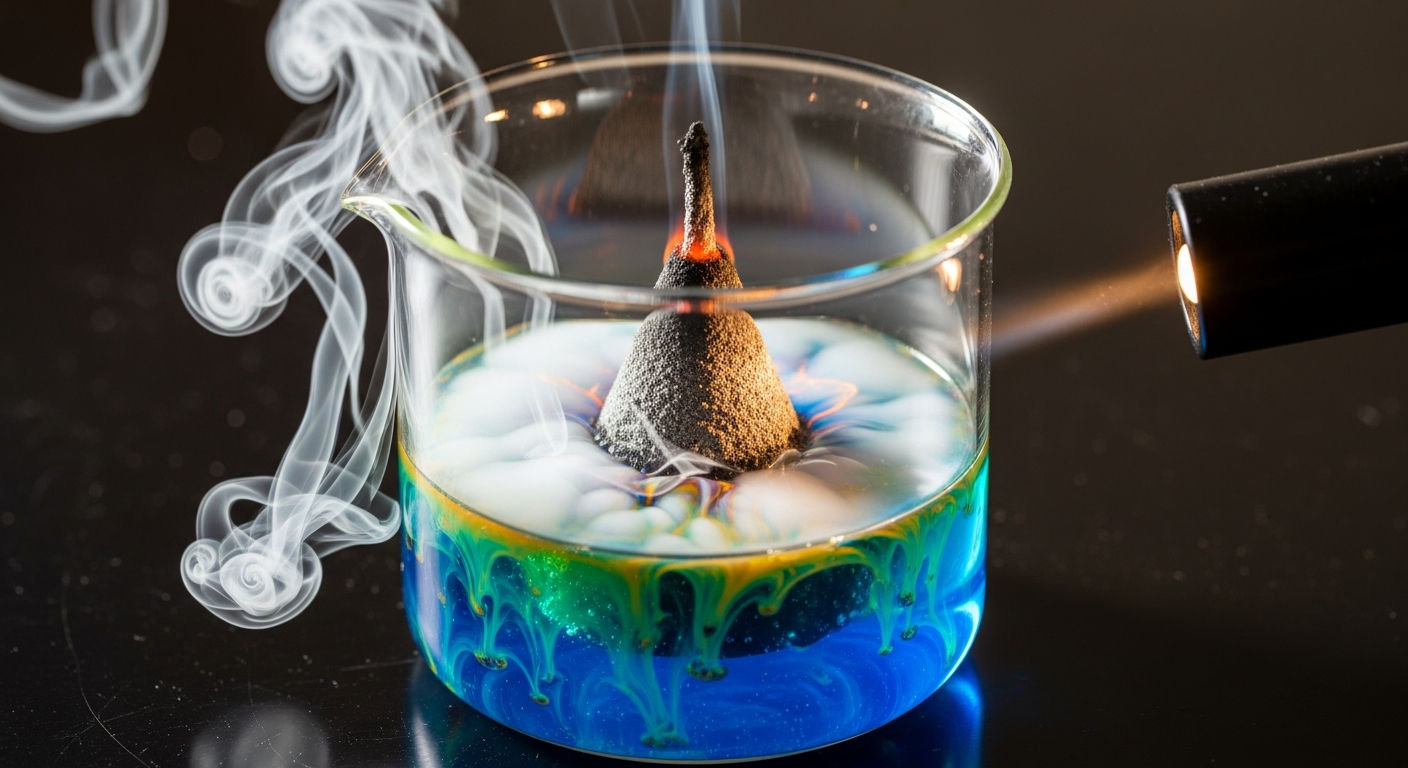 Some reactions pulse and shift like living systems.
When chemistry surprises your eyes
By Peter Teoh, Science Writer
Some reactions change color, pulse, or erupt in dramatic ways. The effects are real chemistry made visible.
Explainer: Why reactions can oscillate
Focus: Oscillating reactions like the Belousov-Zhabotinsky reaction cycle between states as reactants are consumed and regenerated. The shifting concentrations create rhythmic color changes.
Other dramatic effects come from fast energy release or rapid gas formation. These demonstrations are spectacular, but they follow the same reaction rules as any lab experiment.
Summary of Key Ideas:
- Oscillations come from feedback loops in reaction steps.
- Color changes reveal shifts in chemical species.
- Fast reactions can release heat or gas quickly.
Side Notes
- Safety protocols matter even for simple demos.
- Catalysts can speed reactions without being consumed.
Trending Sidebar
- Chemical clocks in classroom demos.
- Art using reaction-driven pigments.
Leave a comment