Why Zero Almost Did Not Exist
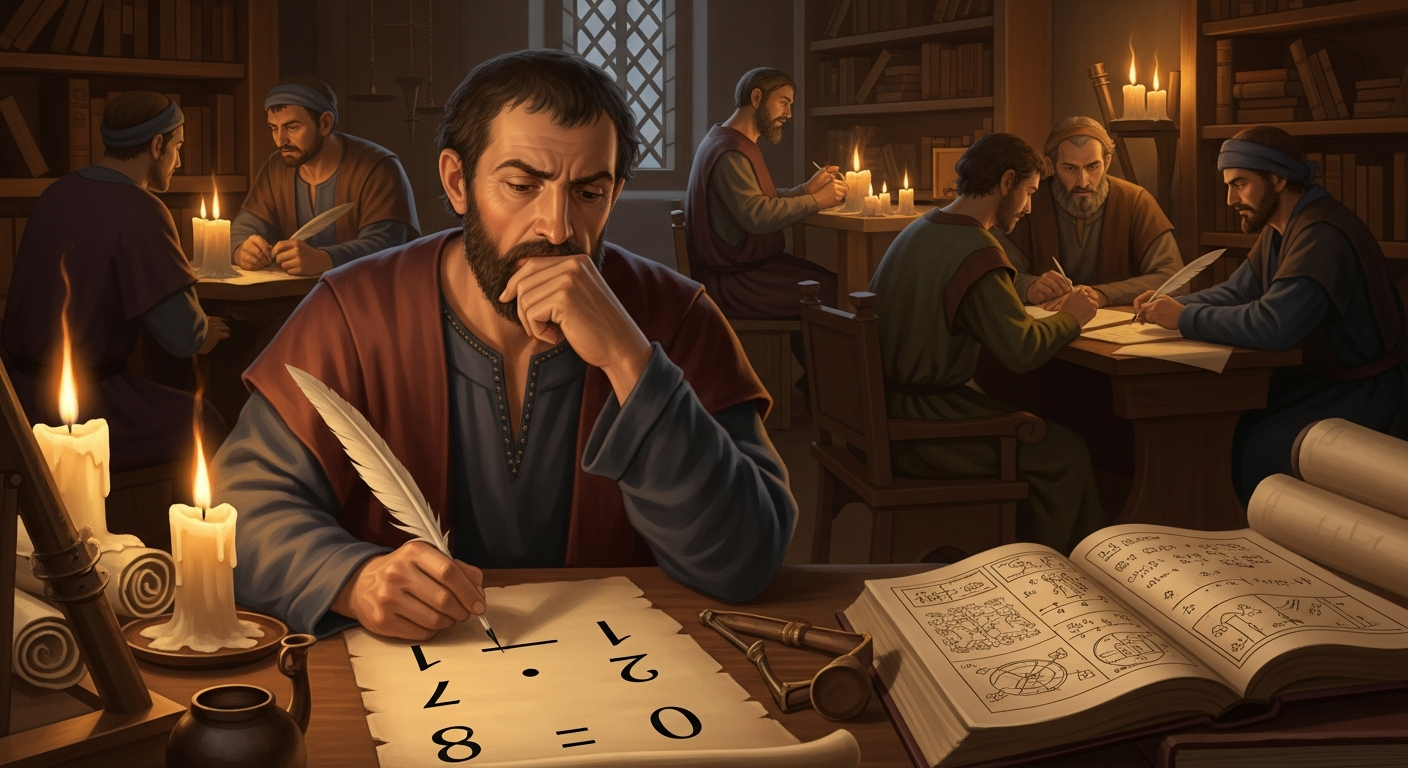 Zero changed the rules of mathematics.
The invention of nothing
By Peter Teoh, Science Writer
Zero feels obvious today, but it took centuries to accept. The idea of representing nothing as a number challenged philosophy, religion, and mathematics.
Explainer: From placeholder to number
Focus: Early civilizations used blank spaces as placeholders, but a true zero needed a symbol and rules for arithmetic. Indian mathematicians formalized it, and the concept spread through trade and scholarship.
Once zero was accepted, place-value notation and algebra became far more powerful. It is a quiet invention that reshaped science, finance, and computation.
Summary of Key Ideas:
- Zero began as a placeholder, not a number.
- Indian mathematicians formalized its rules.
- Place-value systems depend on zero.
Side Notes
- Some cultures resisted zero for philosophical reasons.
- Modern computing treats zero as a core state.
Trending Sidebar
- History of numerals across cultures.
- Zero and the rise of algebra.
Leave a comment